Translating Trèsind Studio
On distilling philosophy.

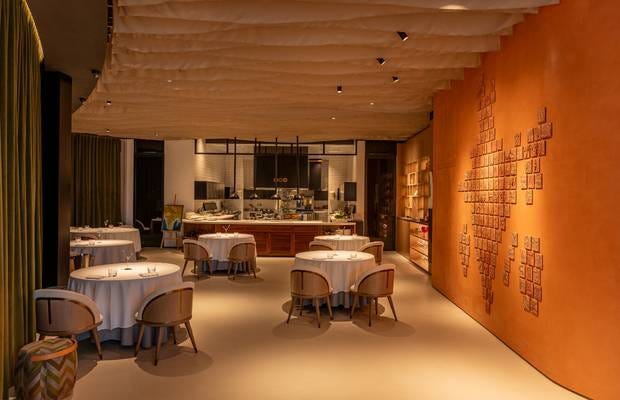
When we began working on The Rise of Indian Food, it was clear early on that this was not a book that could be written simply by assembling recipes.
Not because recipes are unimportant. They are the backbone of any serious kitchen, but they are not where Chef Himanshu Saini’s ideas begin.
The book emerged out of conversations about purpose, direction, and what Indian food has been allowed to be, both within the culture and far beyond it.
At the centre of those conversations sit Trèsind Studio and Himanshu Saini, whose work has always been less interested in preservation and more about possibility. Himanshu noted during our conversations around the book that if he poses one question to ten people, he is looking for the eleventh answer—the outlier, the least obvious but most enticing proposition.
Trèsind Studio is now recognised globally.
It is the world’s first three-Michelin-starred Indian restaurant, widely written about, often cited, and, understandably, positioned as a reference point for contemporary Indian fine dining. That is the view from above the waterline.
What the book attempts to capture is the thinking below it: the questions, tensions, and acts of refusal that shape the restaurant’s identity.
One of the prevailing perceptions of Indian cuisine, particularly outside India, is that it is a heavy, overly spiced monolith.
Sometimes, those perceptions are rooted in iterations of Indian food that evolved overseas, or reflect one’s exposure to a single region that, unfairly, becomes a stand-in for an entire subcontinent.
Travel along India’s coasts, into the Himalayas, across the Thar Desert or through the megalopolis of Mumbai, and those assumptions quickly unfurl.
Yet an equally complex conversation exists within the culture.
On one side sit the comforts and constraints of tradition, the belief that classic recipes and ingredient pairings must remain static.
On the other sits a more uncomfortable question: whether ingredients historically considered non-Indian, such as black truffle, uni or other luxury products, can be used fluently in an Indian dialect without distorting, diluting or pandering to novelty.
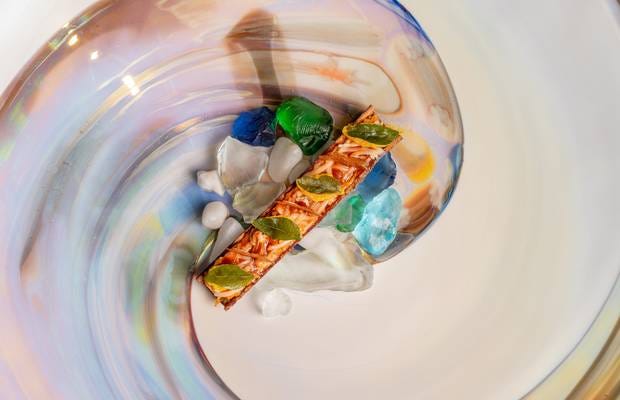
Trèsind Studio thrives in the tension between these poles.
Its philosophy is that Indian cuisine is inherently elastic and capacious enough to absorb, respond to, and evolve without losing its integrity. The restaurant’s role is not to provide answers but to excavate, probe and frame the art of the possible in pursuit of the eleventh answer.
It follows, then, that the recipes in the book could never exist as neutral instructions. Many function instead as questions or gentle provocations.
Some are explorations, others feel closer to mission statements.
A handful are deliberately uncomfortable. There were chapters we laboured over, asking ourselves whether we were truly comfortable putting certain ideas into the world, particularly the chapter titled Why Trèsind Studio, which confronts purpose head-on with a clear-throated call to action.
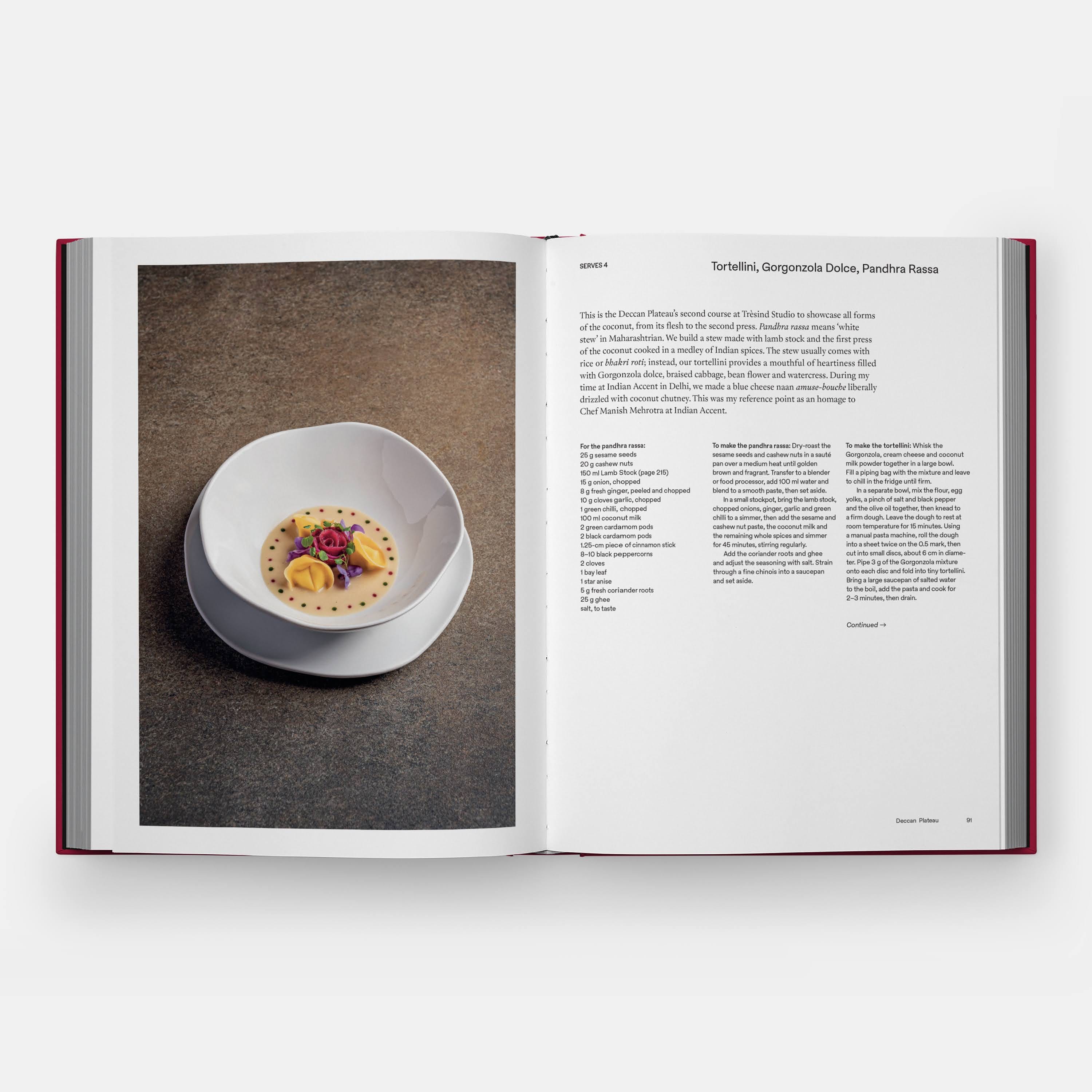
Recipes, as a construct, are an unnatural way to write. At their most basic, they are formulaic—instruments for historical records or directions to deliver consistency.
One pervasive challenge lay in distilling Trèsind Studio dishes—conceived to serve 40 covers over two sittings, executed by a professional kitchen—for home cooks, producing “four servings” with tools already in their cupboards.
After all, three Michelin stars are synonymous with precision and exceptional consistency. But creativity, both in kitchens and in writing, thrives elsewhere. In exploration, in failure, in making mistakes quickly and learning from them. Precision and abandon are uneasy companions, yet both are necessary. The book is forged in that tension.
A recipe can tell you what to do. It rarely tells you why the dish exists, what it responds to or what it is attempting to disrupt. That limitation matters when the recipe itself is a distillation of a larger ambition to gently bend the narrative of Indian cuisine towards its future. Once published, even the most progressive recipe becomes part of the prior art of Indian food, immediately absorbed, referenced and reinterpreted.
We knew, then, that essays would be essential.
They became the vehicle through which Himanshu’s philosophy, and by extension the mission of Trèsind Studio, could be unpacked without over-explaining or blithely flattening nuance.
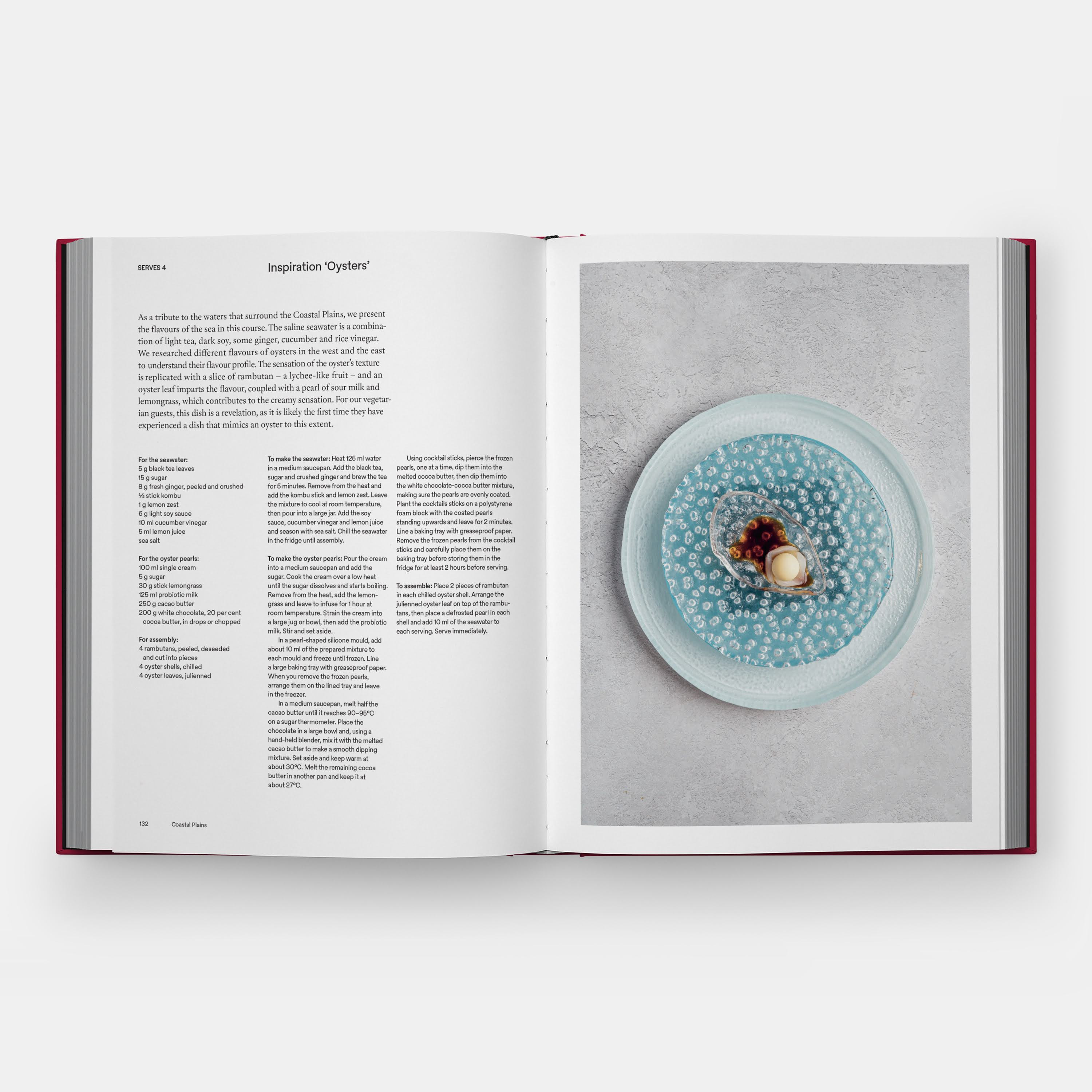
The essays do not seek to instruct so much as to orient.
Each of the book’s five regional chapters opens with an overview of the region as it matters to Trèsind Studio. Sometimes a region inspires a dish, other times a dish organically finds its home.
This contextualisation moves beyond cursory research into geography or climate and instead asks harder questions: how do pockets of cuisines behave within a particular landscape, and then how might those behaviours be revisited, respectfully, within a fine-dining setting and even outside of India?
It is not about extraction. It is about dialogue, between place and plate, memory and modernity, discipline and imagination.
The Rise of Indian Food does not attempt to tether Indian cuisine to a single place. It holds a question up to the light for a moment just long enough to examine it before moving along.
The Rise of Indian Food: Recipes Reimagined by Trèsind Studio is written by Himanshu Saini with Liam Collens, with forewords by Massimo Botturaand Manish Mehrotra. It will be available for purchase from Amazon and in bookstores from 6 May 2026. Published by Phaidon Press. Photography by Shresth Maloo.

Liam is a restaurant critic, food and travel writer based in the Middle East. He co-authored The Rise of Indian Food: Recipes Reimagined by Trésind Studio, out 6 May from Phaidon Press. He owns EatGoSee and contributes to other publications. You can find Liam on Substack, Threads, Instagram, BlueSky or Facebook.
I cannot imagine anyone else writing about the Tresind Studio journey...I truly enjoy your writing.
Can hardly wait!